- Why Cats Stress at the Vet
- Signs of Cat Anxiety at the Vet
- Before the Visit: Preparation Tips
- Carrier Training Step by Step
- Car Ride Desensitization
- Schedule Strategically
- During the Visit: Keeping a Cat Calm
- Anti-Anxiety Medication Options
- After the Visit: Recovery and Behavior Changes
- The Mobile Vet Alternative
- Keeping Cats Healthy Without the Drama
- References
Fifty-eight percent of cat owners delay or skip vet visits because of how their cat reacts. Not because they don't care. Because watching a cat thrash inside a carrier, howl through a 20-minute car ride, and then flatten against the back of a cage in the exam room is genuinely awful for everyone involved.
Cat anxiety during vet visits is one of the most common reasons felines go years without checkups. A skipped wellness exam at age 5 becomes undiagnosed kidney disease at age 8 and a $3,000 emergency at age 10. That stress isn't just unpleasant. It's medically dangerous.
Below is the full picture: why cats panic, how to spot the signs, what to do before, during, and after the visit, which medications help, and why some Orlando cat owners have stopped making the trip altogether. Every recommendation comes from our licensed veterinary team and current AVMA, AAHA, and JFMS guidelines.
Why Cats Stress at the Vet
Dogs are pack animals. Take them somewhere new and many will sniff around, wag, and roll with it. Cats are territorial ambush predators. Remove a cat from their territory and every survival instinct fires at once.
Here's what actually happens, trigger by trigger:
- The carrier. Most cats associate that plastic box with one thing: a terrible experience. It comes out of the closet once a year, they get stuffed inside, and bad things follow.
- The car. Vibrations, engine noise, motion sickness, and zero control over direction. Most cats never ride in cars except to go to the vet, so the association is 100% negative.
- The waiting room. Strange dogs barking. Other cats hissing. Unfamiliar voices. Chemical cleaning smells layered over dozens of animal scents. For a species that relies on scent-marking to feel safe, a vet lobby is sensory chaos.
- The exam table. Cold, slippery stainless steel in a room that smells like disinfectant. A stranger grabs them, pokes them, and sticks them with needles.
A 2020 study in the Journal of Feline Medicine and Surgery confirmed what most cat owners already know: feline stress hormones spike within minutes of carrier confinement and stay elevated for hours after the visit ends. That cortisol surge doesn't just make a cat miserable. It can skew blood test results, elevate heart rate readings, and make accurate diagnosis harder.
Understanding these triggers matters because each one can be addressed individually. No need to fix everything at once.
Signs of Cat Anxiety at the Vet
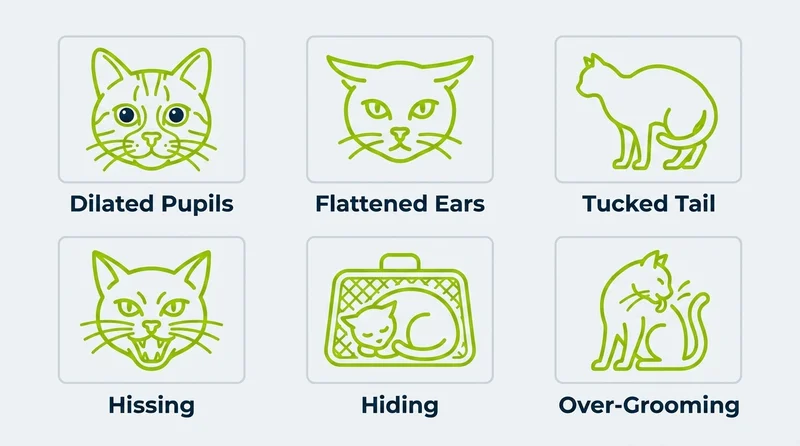
Some signs are obvious. Others are easy to miss if you don't know what to look for.
Physical signs:
- Dilated pupils (eyes go fully black)
- Flattened ears pressed against the head
- Tucked tail or tail wrapped tightly around the body
- Panting or open-mouth breathing (cats don't pant like dogs, so panting signals serious stress)
- Piloerection (fur standing on end along the spine)
Behavioral signs:
- Hissing, growling, or swatting at the vet or at you
- Freezing completely, refusing to move at all
- Pressing into the back of the carrier and refusing to come out
- Urinating or defecating in the carrier (loss of bladder control from fear)
- Excessive grooming or licking after the visit
Subtle signs many owners miss:
- Whiskers pulled forward and fanned out
- Rapid breathing with a closed mouth
- Lip licking without food present
- Avoiding eye contact by turning the head away
- Aggression toward other household cats after returning home
That last one catches many multi-cat owners off guard. A cat comes home smelling like the vet clinic, and the other cats don't recognize them. Hissing, chasing, and fights can erupt between cats that were cuddling on the couch that morning. More on handling that in the post-visit section below.
Before the Visit: Preparation Tips
Preparation that makes a vet visit tolerable happens days or weeks in advance. Trying to calm a panicking cat at the last minute rarely works.
Carrier Training Step by Step
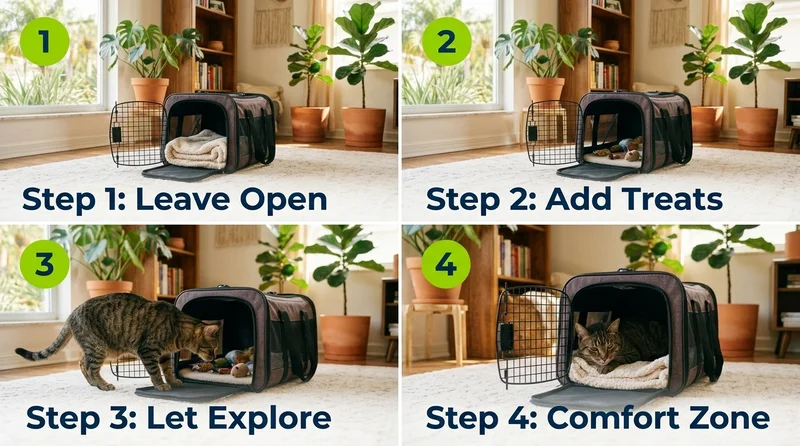
Carriers are the first trigger, and the one you have the most control over. Start at least two weeks before a scheduled appointment.
-
Leave the carrier out, open, in a common area. Don't store it in the garage and pull it out the night before. Set it in the living room with the door removed or secured open. Place a familiar blanket or worn t-shirt inside. Let it become furniture.
-
Add treats and meals inside. Drop a few treats in daily. After a few days, feed meals inside the carrier. Soon the cat walks in voluntarily because good things happen there.
-
Let the cat explore on their terms. Some cats sleep in the carrier within a week. Others need two weeks before they sniff the entrance. Both timelines are normal. Forcing a cat inside defeats the purpose.
-
Close the door briefly. Once the cat goes in willingly, gently close the door for 30 seconds. Open it. Treat. Extend the time gradually until 10 to 15 minutes feels comfortable.
-
Spray Feliway 30 minutes before travel. Feliway Classic mimics feline facial pheromones, the ones cats deposit when they rub their cheeks on furniture they've claimed as "safe." Two to three sprays inside the carrier before departure reduces stress behaviors by 30-40% in clinical studies.
Top-loading carriers make life easier. Instead of pushing a resistant cat through a front door, you lift them gently from above and lower them in. Less struggling, less scratching, and a calmer start to the trip.
Car Ride Desensitization
For cats that panic in the car, gradual exposure works better than flooding them with a 20-minute drive to the clinic.
- Week 1: Place the carrier (with cat inside) in the parked car. Sit there for 5 minutes. Engine off. Treats through the carrier door. Return inside.
- Week 2: Same setup, engine running. Five minutes of vibration and noise with treats.
- Week 3: Short drives around the block. Three to five minutes total. Back home, treats, done.
Secure the carrier on the back seat with a seatbelt through the handle or on the floor behind the front seat. A towel draped over the carrier blocks visual chaos from passing scenery.
Temperature matters more than most owners realize. A car sitting in an Orlando parking lot for 10 minutes in July hits 130°F inside. Run the AC for at least 5 minutes before loading the cat.
Schedule Strategically
Call the clinic and ask about their quietest hours. Early morning appointments mean fewer animals in the lobby and shorter wait times. Some clinics offer cat-only appointment blocks or separate waiting areas. Ask.
During the Visit: Keeping a Cat Calm
A cat reads human stress like a book. If you're tense, gripping the carrier, and talking in a tight voice, the cat picks up on every bit of it.
At the clinic:
- Stay in the car until the exam room is ready. Call from the parking lot and ask the front desk to text you when a room opens. Cats skip the waiting room entirely that way.
- Keep the carrier covered. A towel or blanket draped over all sides creates a visual barrier. A covered carrier blocks the sight of that German Shepherd in the lobby, which means no reaction.
- Elevate the carrier. Place it on a chair or counter, never on the floor. Cats feel more vulnerable at ground level where larger animals can approach from above.
- Leave the carrier base on. Ask the vet to examine the cat while they sit in the bottom half of the carrier. Removing the top and draping a towel over the cat's head lets the vet access the body without full exposure to the room.
- Bring a familiar item. A blanket from home, a worn shirt, or a toy that smells like their territory gives the cat one anchoring scent in an overwhelming environment.
What to ask the vet about:
- Fear Free certification. Fear Free-certified clinics train every staff member to minimize stress at every touchpoint. Soft lighting, pheromone diffusers, towel wrapping, and treats between procedures all factor in.
- Cat-only exam times. More clinics are offering these. Worth driving an extra 10 minutes if it means no dogs in the waiting room.
- Pre-visit medication. For cats with severe anxiety, a single dose of gabapentin given at home before the appointment can mean the difference between a productive exam and one that gets cut short.
Anti-Anxiety Medication Options
Not every cat needs medication. Carrier training and environmental management solve the problem for many. But for cats that urinate in the carrier, bite the vet, or go catatonic with fear, medication is a practical, humane tool.
Gabapentin is the most commonly prescribed option. Originally developed for nerve pain and seizures, it has a strong sedative and anxiolytic effect in cats at appropriate doses. A vet prescribes a single dose to give at home 60 to 90 minutes before the appointment.
What to expect: the cat will be noticeably calmer, possibly a bit wobbly. Drowsiness is normal. Expect it to wear off within 8 to 12 hours with minimal side effects in healthy cats. A 2017 JAVMA study found that cats given gabapentin before vet visits showed significantly lower stress scores than cats given a placebo.
Trazodone is another option, sometimes used alongside gabapentin for cats with extreme anxiety. It takes effect within 1 to 2 hours and also produces mild sedation.
Feliway products are not medications but synthetic pheromone products. Feliway Classic spray inside the carrier, diffusers at home, and wipes for the exam room all have clinical evidence supporting modest stress reduction. They work best combined with behavioral strategies, not as standalone solutions.
Natural calming aids (L-theanine, casein, or valerian supplements) have limited clinical evidence. Some owners report modest improvement. Unlikely to help severe vet anxiety, but may take the edge off mild stress.
A note about dosing: Never give a cat any medication without veterinary guidance. Gabapentin doses for cats differ significantly from dog or human doses. Talk to the vet, get a prescription with proper dosing instructions, and do a trial run at home before the actual appointment day.
After the Visit: Recovery and Behavior Changes
Most articles about cat vet anxiety stop at "during the visit." But for many cat owners, the hardest part comes after.
Normal post-visit behavior (resolves within 24-48 hours):
- Hiding for several hours after returning home
- Reduced appetite for one meal
- Excessive grooming or face-rubbing on furniture (re-scenting their territory)
- Sleeping more than usual
- Avoiding the room where the carrier was
Post-visit aggression in multi-cat households:
A cat returns from the vet smelling like antiseptic, other animals, and stress pheromones. Other cats in the household don't recognize that scent profile. As far as they're concerned, a stranger just walked into their territory.
What follows can range from hissing to full-contact fighting between cats that were best friends that morning. Veterinarians call it non-recognition aggression, and it can persist for days if not managed.
How to handle it:
- Isolate the returning cat in a separate room for 2 to 4 hours with food, water, and litter. Let them groom off the clinic scent and calm down.
- Swap scents. Rub a sock on each cat's cheeks and place it near the other cat to re-introduce familiar pheromones.
- Reintroduce slowly. Open the door. If hissing starts, close it and try again in an hour.
- Use Feliway Multicat diffuser. Plug it in the shared area before you leave for the appointment. It promotes social bonding between cats.
When to call the vet after the visit:
- Lethargy lasting more than 24 hours
- Refusal to eat for more than one full day
- Injection site swelling that's larger than a quarter or grows after 48 hours
- Vomiting, diarrhea, or facial swelling (possible vaccine reaction, call immediately)
- Aggression between cats that persists beyond 3 days
The Mobile Vet Alternative
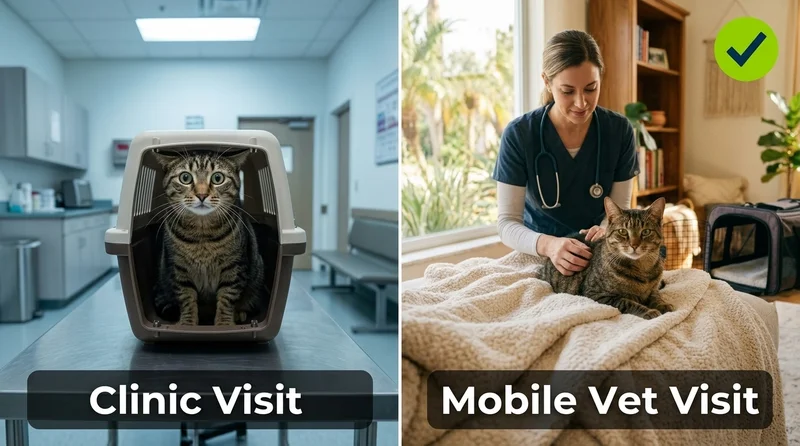
Every trigger listed above (the carrier, the car, the waiting room, the exam table) disappears when the vet comes to the home.
A mobile vet visit means the cat stays on the couch, the bed, or their favorite perch. No carrier battle. No car ride. No lobby full of barking dogs. No cold steel table.
For cats with severe vet anxiety, a home visit isn't a convenience. It's the difference between regular veterinary care and going years without it. That 58% statistic? Most of those owners would book tomorrow if they didn't have to put their cat through the trip.
Here's what a typical mobile visit looks like for an anxious cat:
- The vet arrives at the door with portable equipment
- The cat stays wherever they're comfortable
- The exam happens in familiar surroundings with familiar smells
- Vaccinations, blood draws, and basic diagnostics happen right there
- The cat never leaves the house
Blood tests are actually more accurate at home. Cortisol from travel stress elevates glucose, white blood cell counts, and blood pressure. A calm cat produces lab results that reflect real health, not panic levels.
Multi-cat households benefit too. One visit covers every cat. No multiple trips, no rotating carrier duty, no post-visit re-introduction drama.
Check our mobile vet visit pricing in Orlando for a full breakdown. Our mobile veterinary services cover wellness exams, vaccinations, dental assessments, and bloodwork, all performed at home.
Keeping Cats Healthy Without the Drama
Vet visits don't have to be a battle. Carrier training, strategic scheduling, Feliway, and pre-visit medication can each reduce a cat's stress by a meaningful amount. Combined, they transform a traumatic ordeal into something manageable.
But if a cat falls into that group where no amount of preparation makes the clinic tolerable (the ones who bite, who urinate in the carrier, who refuse to eat for two days after), a mobile vet visit solves the problem at the source.
Cats need regular veterinary care. Skipping it because of anxiety isn't a solution. Finding a way to deliver that care without the trauma is.
Ready to try a stress-free approach? Schedule a mobile vet visit or call us at (877) 345-4326. Cats stay home. We bring the vet.
This article provides general guidance for reducing cat anxiety during vet visits. Always consult your veterinarian for advice specific to your cat's health and behavior.
References
- American Association of Feline Practitioners & International Society of Feline Medicine. "Feline Stress and Health." Journal of Feline Medicine and Surgery, 2020. catvets.com
- American Veterinary Medical Association (AVMA). "Reducing Fear in Veterinary Patients." avma.org
- American Animal Hospital Association (AAHA). "Feline Preventive Healthcare Guidelines." aaha.org/aaha-guidelines
- van Haaften, K.A., et al. "Effects of a single pre-appointment dose of gabapentin on signs of stress in cats during transportation and veterinary examination." Journal of the American Veterinary Medical Association, 251(10), 2017.
- Fear Free Pets. "Fear Free Certification for Veterinary Professionals." fearfreepets.com
- Feliway by Ceva Animal Health. "Clinical Evidence for Feline Pheromone Therapy." feliway.com
Frequently Asked Questions
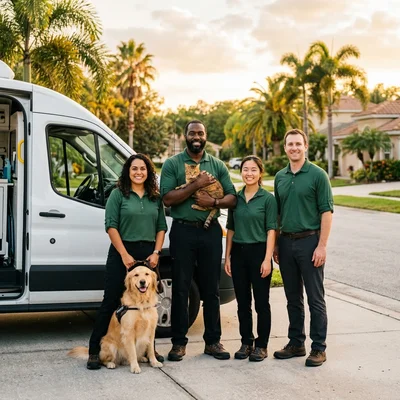
Our team of licensed veterinarians brings compassionate care directly to your home.