
- When Is It Time? Recognizing the Signs
- Quality-of-Life Assessment Guide
- Understanding the Euthanasia Process
- Step 1: Consultation and Arrival
- Step 2: Sedation
- Step 3: Peaceful Passing
- Step 4: Aftercare
- In-Home vs. Clinic Euthanasia
- What It Costs in Orlando
- Euthanasia Procedure
- Aftercare Costs
- How to Prepare: Before the Visit
- Choosing the Space
- Deciding Who Should Be Present
- Hours Before
- What to Have Ready
- Aftercare Options
- Cremation
- Aquamation
- Home Burial
- Memorial Keepsakes
- Coping with Pet Loss
- What Normal Grief Looks Like
- When Grief Needs Professional Support
- Children and Pet Loss
- Other Pets in the Household
- Orlando Pet Loss Resources
- Grief Support
- Emergency Veterinary Hospitals
- In-Home Euthanasia Providers
- When You're Ready
- References
If you're reading this, chances are someone you love is suffering. Your dog can't get comfortable. Your cat has stopped eating. A vet used words like "quality of life" at the last appointment, and now you're lying awake at 2 a.m. searching for answers.
We're not going to rush you toward a decision or pretend there's a simple answer. What we will do is walk through every part of pet euthanasia in Orlando, from recognizing when your pet is telling you they're ready, through what the procedure actually looks like, to finding your way through grief. Everything here reflects current guidelines from the AVMA and AAHA, written with input from our licensed veterinary team who sit with Orlando families through these moments regularly.
Take your time with it. Bookmark it. Come back when you're ready.
When Is It Time? Recognizing the Signs
Every pet owner dreads asking this question. No blood test or scan gives you a definitive answer. But clear signals emerge when your pet's quality of life has declined to a point where continuing means more suffering than comfort.
Physical signs veterinarians look for:
- Chronic, unmanageable pain. Your pet no longer responds to pain medication, or the medication causes side effects that create new suffering
- Refusal to eat or drink. Not just a skipped meal, but consistent rejection of food and water over multiple days, especially favorite treats
- Inability to stand or walk. Collapse, dragging limbs, or needing to be carried outside for bathroom needs
- Loss of bladder or bowel control. Frequent accidents that cause distress to your pet (many animals are deeply bothered by soiling themselves)
- Difficulty breathing. Labored breathing, open-mouth breathing in cats, or persistent coughing that disrupts rest
- Withdrawal. A normally social pet hiding, avoiding contact, or no longer responding to your voice
Beyond physical symptoms, pay attention to your pet's engagement with life. Do they still greet you at the door? Wag their tail when you reach for the leash?
When those sparks of personality fade, when your dog stops being your dog, that loss tells you something important.
Here is the hardest truth: waiting for the "perfect" moment often means waiting too long. Veterinarians consistently say they see more pets who suffered longer than necessary than pets who were euthanized too early. If you're asking the question, it may already be time to talk to your vet.
For senior dogs showing early decline, our guide to senior dog care covers signs of aging versus signs that something needs medical attention.
Quality-of-Life Assessment Guide
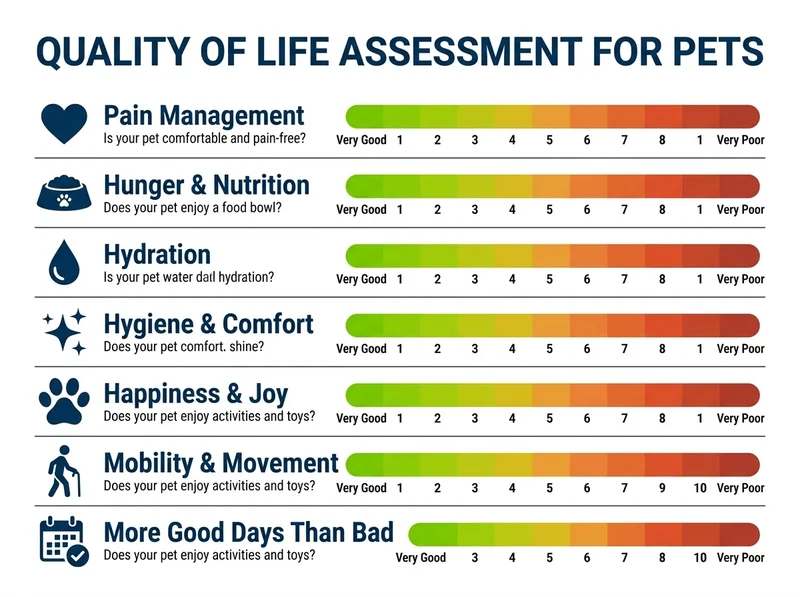
Gut feeling matters, but a structured framework helps you think clearly during an emotional time. Dr. Alice Villalobos, a veterinary oncologist, developed a scale called HHHHHMM that evaluates your pet's condition across seven categories.
Rate each category from 1 (worst) to 10 (best):
| Category | What to Assess | Score (1-10) |
|---|---|---|
| Pain | Is pain being managed successfully? Does your pet rest comfortably? | ___ |
| Hunger | Is your pet eating enough to maintain weight? Does eating seem enjoyable or forced? | ___ |
| Hydration | Is your pet drinking water? Are they dehydrated (check gum moisture and skin elasticity)? | ___ |
| Hygiene | Can your pet keep themselves clean? Are there wounds, sores, or persistent soiling? | ___ |
| Happiness | Does your pet still show interest in life, toys, people, surroundings? Any tail wags, purrs, or head bumps? | ___ |
| Mobility | Can your pet get up, move around, and go outside (or to the litter box) without assistance? | ___ |
| More Good Days Than Bad | Over the past 14 days, how many days were genuinely good versus difficult or painful? | ___ |
How to interpret the scores:
A total above 35 out of 70 generally indicates acceptable quality of life. Below 35, a conversation about euthanasia becomes important.
But numbers alone don't tell the whole story. A pet scoring 8 in every category except a 1 in pain is still suffering. Context matters.
Track scores weekly. Trajectory tells you more than any single snapshot. A steady decline across multiple categories over two to three weeks is a clear pattern, even if individual scores haven't yet dropped to crisis levels.
A note about guilt: Many pet owners score their pet generously because a low score feels like giving up. Be honest with yourself. Rating your pet's pain at a 7 when you know it's a 3 doesn't protect them. It delays a compassionate decision.
Understanding the Euthanasia Process
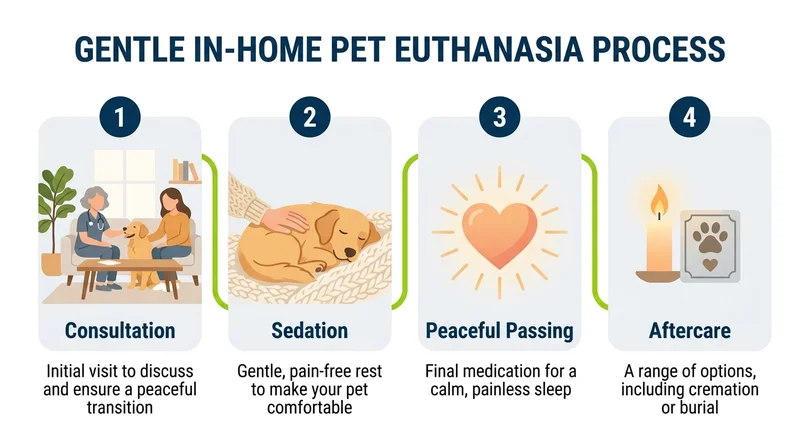
Fear of the unknown makes everything harder. Knowing exactly what happens during euthanasia removes some of that fear, not the sadness, but the anxiety about whether your pet will suffer.
Step 1: Consultation and Arrival
For in-home euthanasia, your veterinarian arrives at the house and takes time to meet your pet in a calm setting. Many vets will sit on the floor with you and your pet for this part. They'll explain each step, answer your questions, and confirm that you're ready before anything begins.
For clinic visits, you'll typically be brought to a quiet room away from the main waiting area. Ask about this when you call. Most veterinary practices have a dedicated room or a side entrance for euthanasia appointments so you don't have to sit in a busy lobby.
Step 2: Sedation
A sedative is administered, usually through a small injection in the muscle of your pet's hind leg. Within 5 to 15 minutes, your pet drifts into a deep, comfortable sleep. From that point forward, they are fully unconscious.
What follows is often the most peaceful part. Your pet relaxes completely. Muscles that have been tense with pain soften. You can hold them, pet them, talk to them.
Some pets take longer to sedate than others, particularly large dogs or those on certain medications. Your vet will wait as long as needed. There is no rush.
Step 3: Peaceful Passing
Once your pet is deeply sedated and completely unaware, an overdose of pentobarbital is administered, usually through an IV in the front leg. Brain activity stops first, then the heart. Your pet feels nothing. They are already far beyond consciousness.
About 30 seconds is all it takes. Breathing stops. Heartbeat stops. Your pet is gone.
What you may notice afterward: Occasional muscle twitches are normal and are reflexes, not signs of consciousness. Your pet's eyes may remain open. Bladder or bowels may release.
All of these are purely physical responses that occur after death. Your pet did not experience any of them.
Step 4: Aftercare
You'll have as much time as you need. When you're ready, your vet will discuss aftercare arrangements: cremation, aquamation, or home burial. For in-home visits, the vet typically handles transport to the cremation facility.
An answer to the question you're afraid to ask: No, your pet does not feel pain during euthanasia. According to the AVMA, injectable euthanasia is the most humane method available. Sedation ensures your pet is unconscious before the final injection. They fall asleep in your arms and simply don't wake up.
In-Home vs. Clinic Euthanasia
Both options are humane. Choosing between them depends on your pet, your family, and your circumstances.
| Factor | In-Home | Clinic |
|---|---|---|
| Pet's comfort | Familiar surroundings, own bed, reduced anxiety | Clinical setting, unfamiliar smells and sounds |
| Family participation | Everyone can be present, including children and other pets | Typically limited to 1-2 family members |
| Timeline | Unhurried, often 45-90 minutes | Usually 20-30 minutes, may feel rushed |
| Cost | $250-$400 in Orlando | $150-$250 in Orlando |
| Scheduling | May need 24-48 hours to arrange | Often available same-day |
| Aftercare | Vet handles transport | Clinic handles directly |
When in-home is the better fit:
Your pet is anxious, aggressive at the vet, or too large or immobile to transport comfortably. You want your whole family present. Your other pets need to witness the passing to understand the loss.
When a clinic makes sense:
Your pet needs emergency euthanasia and no mobile vet is available immediately. You prefer the emotional separation of not associating your home with the experience. Cost is a deciding factor.
We offer in-home euthanasia throughout Orlando for families who want their pet's final moments to be at home. But what matters most isn't the setting. It's that your pet's passing is peaceful.
What It Costs in Orlando
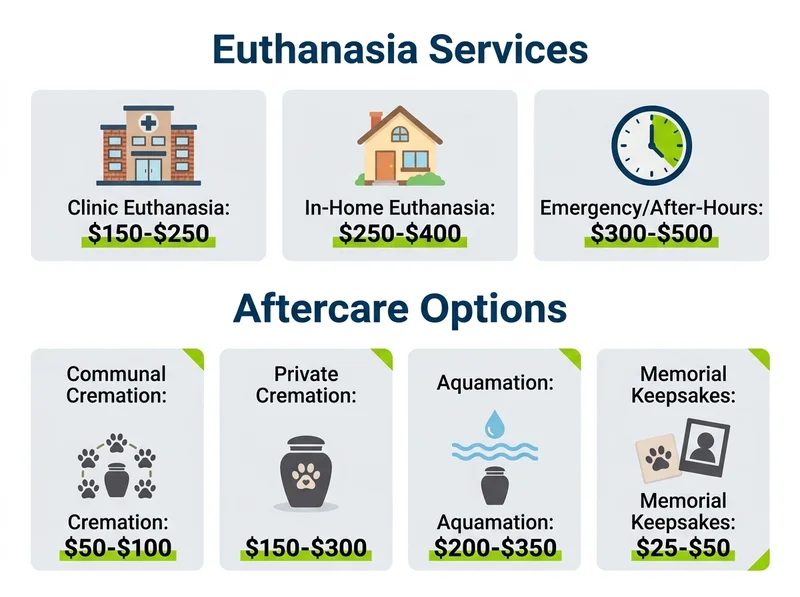
Money shouldn't be the reason a pet suffers longer than necessary. Here's what euthanasia actually costs in the Orlando area so you can plan without surprises.
Euthanasia Procedure
| Service | Price Range |
|---|---|
| Clinic euthanasia | $150-$250 |
| In-home euthanasia | $250-$400 |
| Emergency/after-hours euthanasia | $300-$500 |
Aftercare Costs
| Service | Price Range |
|---|---|
| Communal cremation (ashes not returned) | $50-$100 |
| Private cremation (ashes returned in urn) | $150-$300 |
| Aquamation (water-based cremation) | $200-$350 |
| Memorial paw print or clay impression | $25-$50 (often included) |
| Customized urn or keepsake | $30-$150 |
Total cost range: $200 for a basic clinic euthanasia with communal cremation, up to $750 for in-home euthanasia with private cremation and memorial keepsakes.
Most Orlando providers accept CareCredit and Scratchpay, which offer payment plans with low or zero interest for qualifying applicants. Some nonprofit organizations and shelters offer reduced-cost euthanasia for families facing financial hardship. Call 211 (Orange County) for local assistance programs.
For a broader breakdown of mobile veterinary pricing, including euthanasia, see our mobile vet cost guide for Orlando.
How to Prepare: Before the Visit
Preparation won't make this easy. But it can prevent added stress from feeling unprepared in an already overwhelming moment.
Choosing the Space
If euthanasia is happening at home, pick a room where your pet feels most comfortable. Their favorite spot on the couch, their bed in the living room, the sunny patch on the back porch. Lay down a blanket or towel (bladder release is common). Some families spread a picnic blanket in the backyard.
Deciding Who Should Be Present
Young children can handle saying goodbye when they're prepared and supported. What damages children is being excluded and not understanding what happened. If children are present, explain beforehand what they'll see.
Other pets in the household benefit from being present or at least being allowed to see and sniff the body afterward. Pets who never witness the loss often search the house for days or weeks.
Hours Before
Spoil your pet if they can eat. A cheeseburger, ice cream, a special treat they've always loved. Take a slow walk if they're able. Sit together.
Take photos and video. You may not want to right now, but most owners are grateful later to have recordings of those final hours.
Some families write a letter to their pet or create a small ritual. There's no wrong way to do this. Just don't let fear of saying goodbye prevent you from being present for it.
What to Have Ready
- A blanket or large towel for beneath your pet
- Water bowl nearby (some pets drink during the sedation phase)
- Tissues
- Your pet's favorite toy or blanket (some families include these with cremation)
- Phone set to silent, because this is not a moment to be interrupted
- Payment arranged in advance if possible (most vets handle billing before or after, not during)
Aftercare Options
You don't have to decide everything in advance, but knowing your options reduces one source of stress.
Cremation
Private cremation ($150-$300): Your pet is cremated individually. Ashes are returned to you, typically within 1 to 2 weeks, in a standard urn or a container of your choosing. Most Orlando pet owners choose private cremation.
Communal cremation ($50-$100): Multiple pets are cremated together. Ashes are not returned. A dignified, lower-cost option. Remains are typically scattered at a designated memorial area.
Aquamation
Alkaline hydrolysis uses water instead of flame. It takes longer but produces a finer, whiter ash and has a smaller environmental footprint. A handful of Orlando-area providers offer aquamation at $200-$350. Ask your veterinarian for referrals.
Home Burial
Florida law allows pet burial on private property. Requirements: burial must be at least 2 feet deep, at least 100 feet from any well or water source, and the body should be wrapped in biodegradable material. Check your HOA rules and county ordinances. Orange County permits home burial, but some subdivisions have covenants that prohibit it.
Memorial Keepsakes
Many families find comfort in a physical remembrance:
- Clay or ink paw prints (most veterinarians offer these at the time of euthanasia)
- Fur clippings placed in a small locket or keepsake box
- Custom urns with engraved nameplates
- Garden memorial stones
- Commissioned pet portraits from photos
Your veterinarian can usually arrange paw prints and fur clippings before your pet's body is transported for cremation. Ask about this when scheduling. Planning ahead is much easier than requesting it after the fact.
Coping with Pet Loss
Grief after losing a pet is real, and it can be surprisingly intense. You shared your daily routine with this animal. They greeted you at the door, slept at the foot of your bed, sat beside you on the worst days without asking a single question. That loss deserves to be mourned fully.
What Normal Grief Looks Like
Expect the first week to be brutal. You'll reach for the leash out of habit. You'll hear phantom collar jingles. Quiet in the house will feel wrong.
You might cry at a commercial featuring a dog. All of this is normal.
Grief is not linear. You'll have a good day, then a terrible one. Something small, a chew toy behind the couch, a reminder notification for a vet appointment, can bring the pain back full force weeks later.
None of that means you're failing at healing. It means you loved your pet.
Most people find the acute grief softens over 4 to 8 weeks. Sadness doesn't disappear, but it becomes something you carry rather than something that carries you.
When Grief Needs Professional Support
Talk to a grief counselor if you experience:
- Inability to function at work or in daily life for more than 2 weeks
- Persistent feelings of guilt that don't ease with time
- Intrusive thoughts about whether your pet suffered
- Withdrawal from friends, family, or activities you used to enjoy
- Grief that triggers or worsens existing depression or anxiety
Pet loss grief is a legitimate specialty within counseling. You don't need to justify your grief to anyone. If the loss is affecting your daily life, professional help is available.
Children and Pet Loss
Children grieve differently than adults. They may seem fine one moment and inconsolable the next. They may ask the same questions repeatedly as they process the concept. Behavioral changes, trouble sleeping, clinginess, regression in younger children, often replace words.
Be honest. Answer questions directly. "Fluffy's body was too sick to get better, and she was in pain, so the doctor helped her stop hurting."
Let them participate in memorials: drawing pictures, planting a flower, choosing a spot for the urn. Children recover from honest grief. They struggle with unspoken loss and confusion.
Other Pets in the Household
Dogs and cats do grieve. Studies from the ASPCA confirm that surviving pets may eat less, search the house, vocalize more, or become unusually clingy after a companion dies. Behavioral changes typically resolve within 2 to 4 weeks.
Keep surviving pets' routines consistent. Extra attention helps, but don't overcompensate to the point of creating dependency. If behavioral changes persist beyond a month, consult your veterinarian. Some animals benefit from short-term anxiety support during the adjustment period.
Orlando Pet Loss Resources
You don't have to go through this alone. These resources serve the greater Orlando area.
Grief Support
- ASPCA Pet Loss Hotline: (877) 474-3310, free, confidential support from trained counselors
- Association for Pet Loss and Bereavement: aplb.org, online support groups and grief resources
- Lap of Love Pet Loss Support: lapoflove.com/pet-loss-support, free support groups, some held virtually for Orlando-area residents
Emergency Veterinary Hospitals
If your pet is in acute distress and needs immediate care:
- Pet Emergency of Central Florida, 24/7 emergency services
- BluePearl Pet Hospital (Orlando), 24/7 emergency and specialty care
- 24/7 Animal Hospital of Orlando, round-the-clock emergency care
In-Home Euthanasia Providers
- Orlando Mobile Vet, our in-home euthanasia service with compassionate, unhurried care
- Lap of Love, national network with Orlando veterinarians
- CodaPet, online scheduling platform connecting families with local vets
- Heartstrings Pet Hospice, specialized in-home end-of-life care
We included other providers because this guide is about helping you, not selling to you. Choose the veterinarian your family trusts most.
When You're Ready
There is no right timeline for this decision. Some families need weeks to prepare. Others call when they know it's time and want to act before suffering worsens. Both approaches are valid.
If your pet is declining and you want to talk through whether it's time, our veterinary team is available by phone at (877) 345-4326. No pressure, no obligation, no judgment. Sometimes a 10-minute conversation with a vet who has guided hundreds of families through this moment is all you need to feel less alone.
Whatever you decide, know this: choosing euthanasia to end suffering is not giving up on your pet. It is the last act of love you can give them, a peaceful, painless goodbye on their terms.
This article provides general guidance about pet euthanasia. Every pet's situation is unique. Always consult your veterinarian for advice specific to your pet's health and condition.
References
- American Veterinary Medical Association (AVMA). "AVMA Guidelines for the Euthanasia of Animals." avma.org/resources-tools/avma-policies/avma-guidelines-euthanasia-animals
- American Animal Hospital Association (AAHA). "End-of-Life Care Guidelines." aaha.org/aaha-guidelines/end-of-life-care
- Villalobos, A. E. "Quality of Life Scale (HHHHHMM Scale) for Pets." Veterinary Practice News, 2004.
- International Association for Animal Hospice and Palliative Care (IAAHPC). "Animal Hospice and Palliative Care Guidelines." iaahpc.org
- ASPCA. "Grieving the Loss of a Pet." aspca.org/pet-care/general-pet-care/grieving-loss-pet
- Companion Animal Euthanasia Training Academy (CAETA). "Pet Euthanasia Best Practices." caetainternational.com
Frequently Asked Questions

Our team of licensed veterinarians brings compassionate care directly to your home.